Mar, 15 2026
South America
Atacama Desert: A Land of Extremes
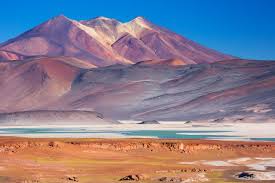
Nestled on the Pacific coast of South America, the Atacama Desert is a mesmerizing desert plateau spanning over 1,600 kilometers west of the Andes Mountains in Chile. Covering an area of 105,000 km2, this arid expanse becomes 128,000 km2 when including the barren lower slopes of the Andes.
The Atacama Desert holds the title of the driest nonpolar desert globally and the second driest overall, making it a land of extremes. It receives less precipitation than polar deserts and is recognized as the largest fog desert on Earth. The desert's unique features have made it a preferred location for Mars expedition simulations due to its striking similarity to the Martian environment.
The extreme aridity of the Atacama Desert is a result of the cool Humboldt ocean current flowing north and the Pacific anticyclone. Situated between the Andes and the Chilean Coast Range, the desert experiences a two-sided rain shadow effect. This geographical setup prevents moisture advection from both the Pacific and Atlantic Oceans, contributing to the desert's unparalleled dryness.
The Atacama Desert ecoregion stretches for 1,600 kilometers along the coast of northern Chile, extending into southern Peru. Bordered by the Chilean Matorral ecoregion and the Central Andean dry Puna ecoregion, the desert's landscape is defined by the Coastal Cliff of northern Chile and an intermediate depression forming endorheic basins.
The Atacama Desert's history dates back to the Middle Miocene, experiencing hyper aridity for millions of years. Its unique arid conditions have challenged scientific exploration, with significant discoveries such as a potential Archean Earth-like environment in the Puna de Atacama. The desert's ancient past and extreme weather events make it a landscape of scientific intrigue.
Flourishing amidst the harsh environment, the Atacama Desert boasts a surprising array of flora and fauna. Over 500 plant species have adapted to the extreme conditions, including the llareta, a resilient plant that can reach ages over 3,000 years. The desert's unique ecosystem supports cacti, succulents, and flowering plants during the 'desierto florido' season.
While the climate limits permanent animal residents, the Atacama Desert is not devoid of life. Sand-colored grasshoppers, beetles, desert wasps, butterflies, and red scorpions inhabit the arid landscape. The desert's fauna, though sparse, plays a crucial role in maintaining the fragile ecological balance of this extreme ecosystem.